
Battery vs Starter vs Alternator: How to Tell Where the Problem Is
These three components sit in the same starting story but fail in different ways. Use symptom timing and test direction to keep the diagnosis organized.

Battery, starter and alternator problems often get blended together because they share the same story: the vehicle starts, charges and starts again—or it does not. Their roles are different, so the timing of the symptom matters.
Keep the roles separate
The battery stores energy for starting and supports the electrical system. The starter uses electrical energy to rotate the engine. The alternator replenishes energy while the engine runs. A symptom can involve more than one part, which is why a test is more useful than a guess.
| Pattern | What it may suggest | Useful next direction |
|---|---|---|
| No crank or clicks | Starting power, connections or starter path | Describe sound, inspect safely and plan a starting-circuit test. |
| Starts with assistance but repeats | Discharged battery, charging issue or drain | Separate battery condition, charging and off-state draw. |
| Battery warning while driving | Charging-system direction | Follow vehicle-specific charging checks and safety boundaries. |
| Engine cranks normally but does not run | Usually not a starter-only question | Move to crank/no-start, scan and engine-management evidence. |
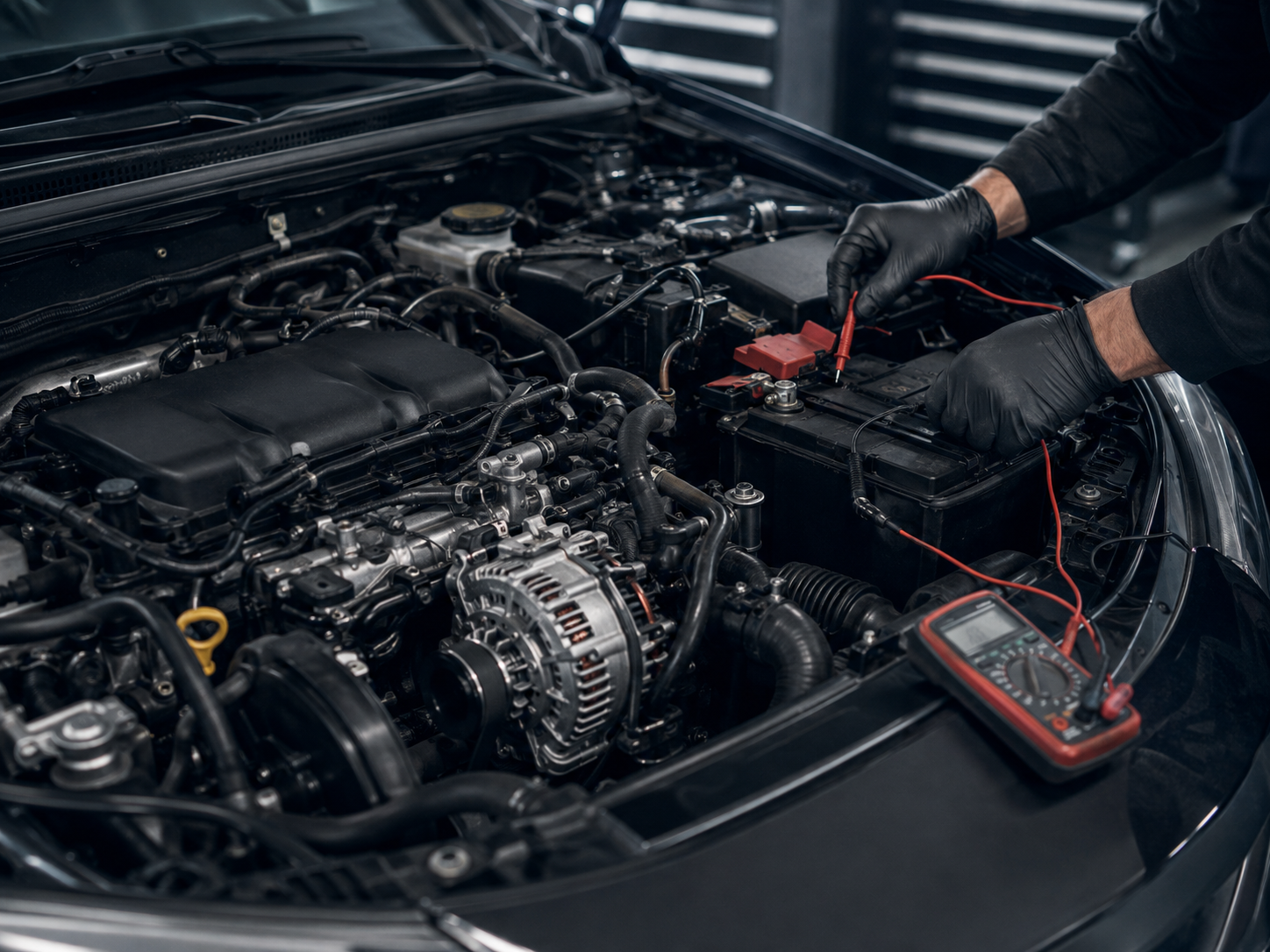
Why “new battery” is not the end of the story
A new battery can be discharged, poorly connected, incorrectly matched or affected by another fault. Conversely, a weak starting symptom does not prove the battery is the cause. Record what happened before and after the replacement, then test the system that remains in question.
A safer diagnostic sequence
- Describe crank or no-crank behavior.
- Check visible connections and warnings safely.
- Separate battery health from charging performance and off-state drain.
- Use a scan when it adds vehicle-specific evidence.
- Stop before unsafe access or unsupported component replacement.
Continue diagnosing
Choose the next guide that matches the symptom or evidence you observed.


Sources & editorial review
This guide provides general educational information and separates observations from diagnostic possibilities. Vehicle-specific procedures and technical claims should be checked against the applicable service information before action.