
Cranks vs No Crank: The First Step in Diagnosing a Car That Won't Start
The sound you hear determines the first diagnostic branch. Learn how to describe it without turning one symptom into a parts verdict.
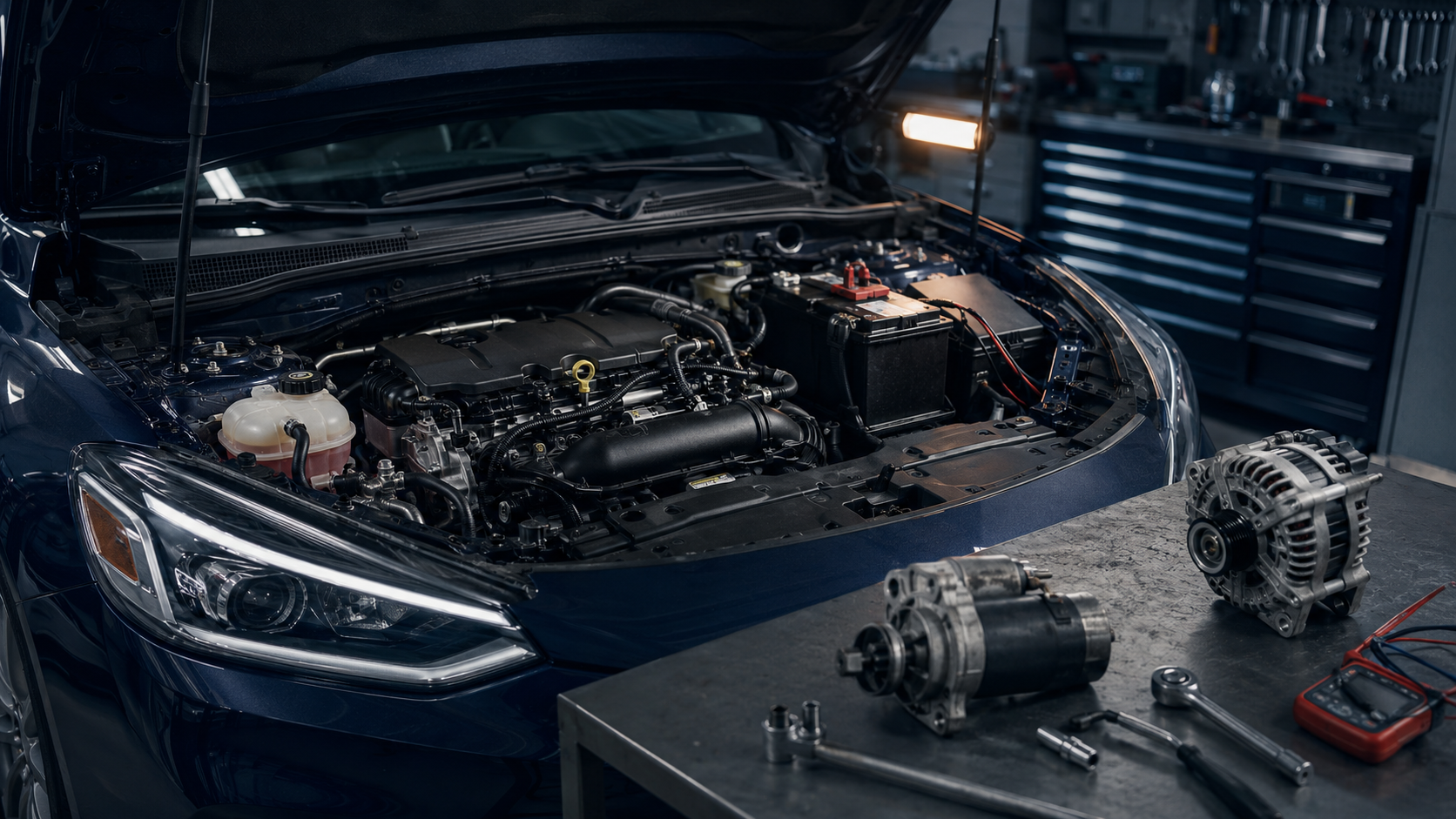
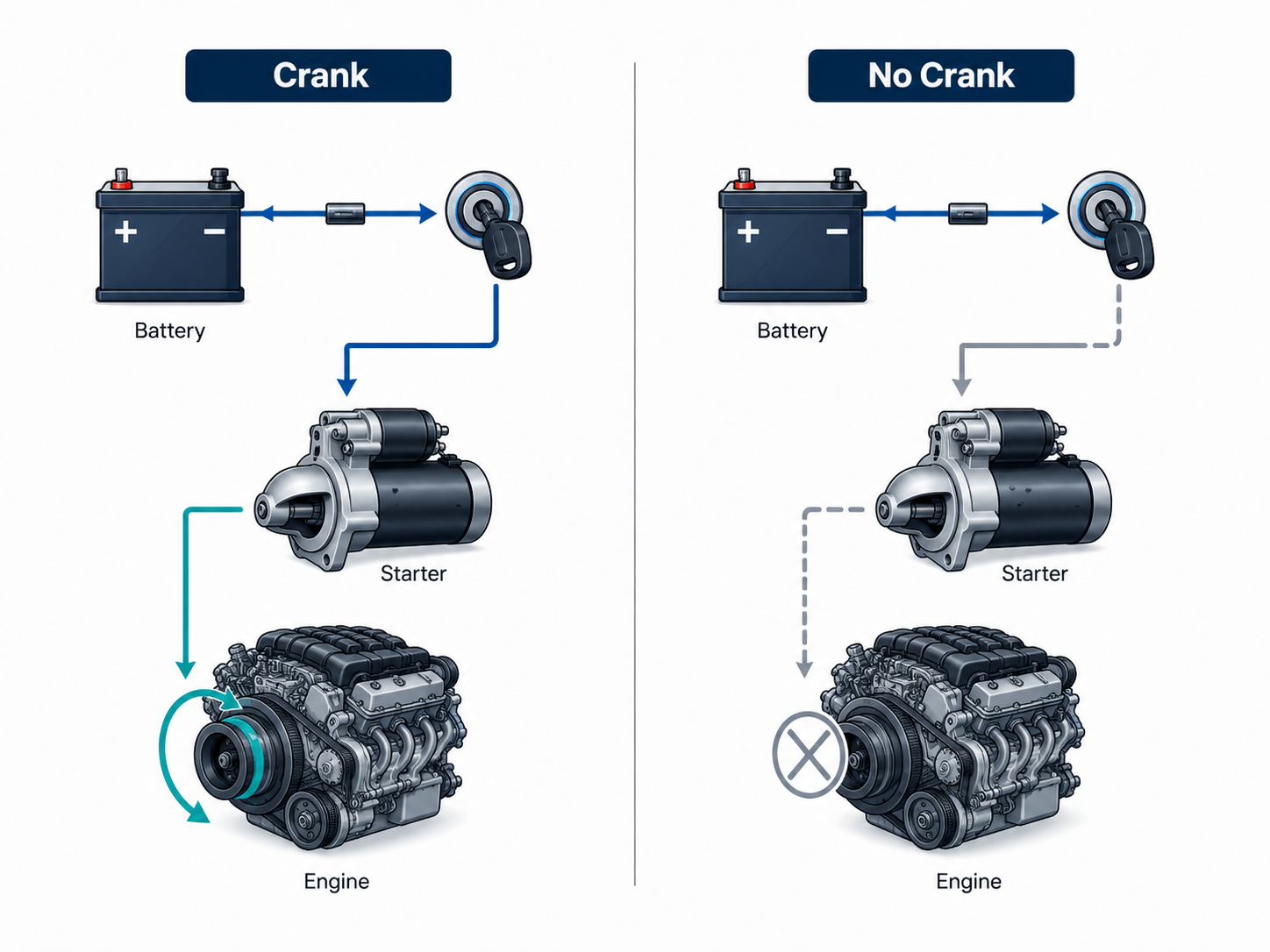
“It will not start” describes several different states. The starter may not move the engine at all, or it may turn the engine normally while combustion never begins. Calling the state correctly is the first useful diagnostic step.
What cranking sounds like
Normal cranking is a repeated engine-rotation sound. Slow cranking, a single click, repeated clicks and silence are different observations. None of them proves a particular failed component by itself, but each changes what should be checked next.
The no-crank path
Begin with battery condition, connections, control input, key or security messages and the starter path. A dashboard that remains lit does not rule out a starting-circuit problem. Use a safe test plan and vehicle-specific information before giving exact procedures.
The crank/no-start path
When the engine turns but does not run, keep the starter separate from fuel, ignition, timing, sensor and security questions. A scan tool may add evidence when a warning light or monitored signal is involved.
- Record the exact sound and dashboard behavior.
- Note whether the symptom is consistent or intermittent.
- Record any warning or security message before clearing codes.
- Choose the next test based on evidence, not the most familiar replacement part.
Related diagnostic paths
A no-crank result naturally leads to battery, starter and connection checks. A crank/no-start result can lead to an OBD-II scan, sensor evidence or fuel and ignition diagnosis. These are separate articles because they answer different user questions.
Continue diagnosing
Choose the next guide that matches the symptom or evidence you observed.



Sources & editorial review
This guide provides general educational information and separates observations from diagnostic possibilities. Vehicle-specific procedures and technical claims should be checked against the applicable service information before action.